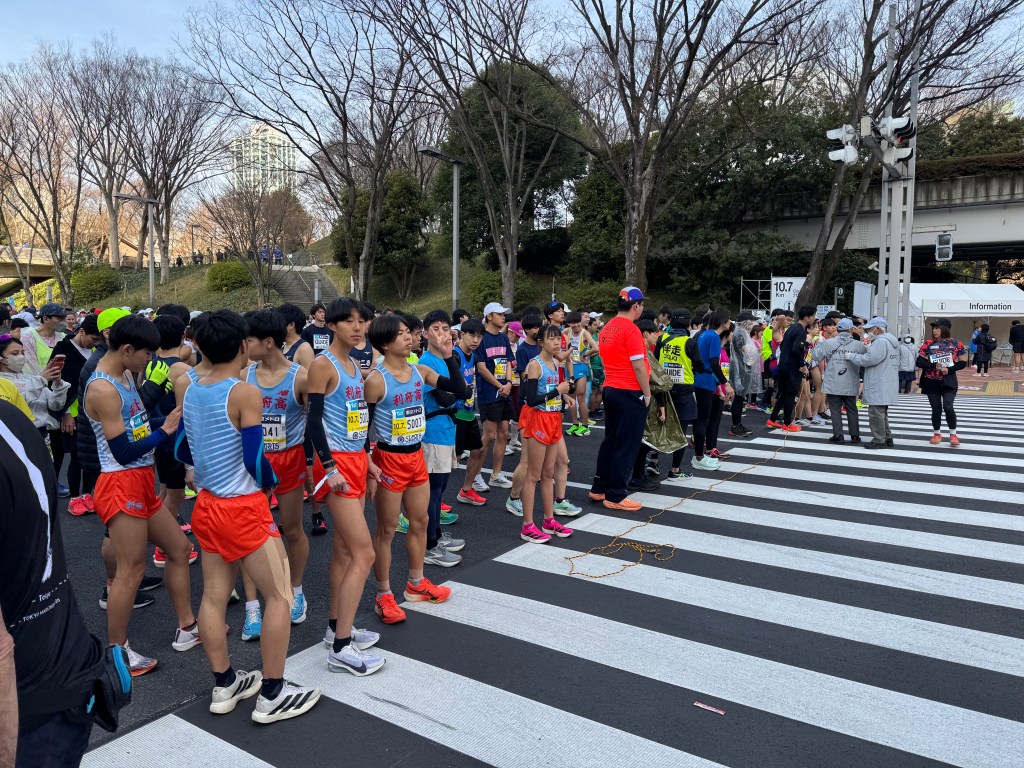
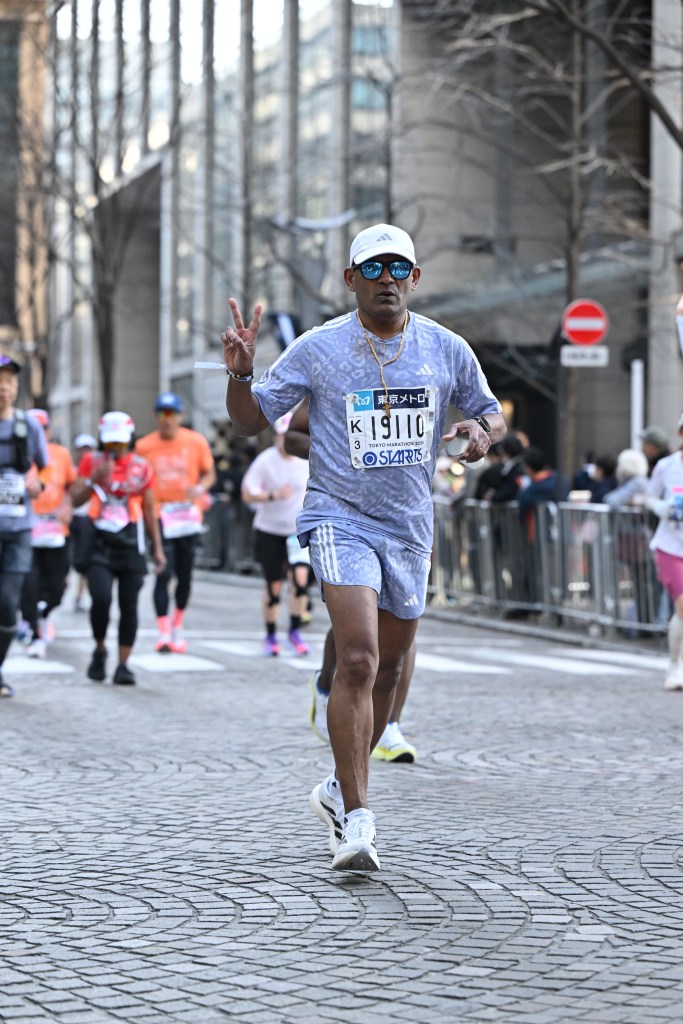
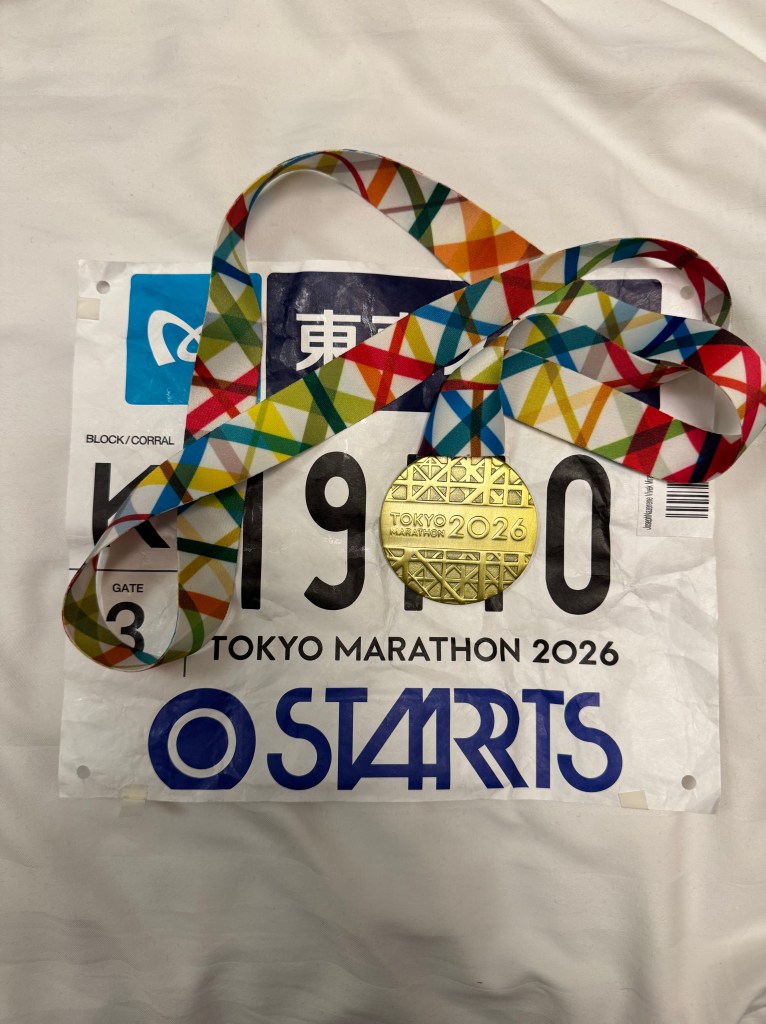
I ran the Tokyo Marathon on March 1, 2026, — my eighth marathon and a new milestone among the World Marathon Majors alongside Chicago, Berlin, and New York City. Running through Tokyo was unlike any race I’ve experienced: a course winding through the city’s main districts, crowds lining the streets, and an atmosphere that turned effort into celebration.
Why Tokyo Stands Apart Tokyo draws runners from around the world, and this year’s race hosted approximately 38,000 participants, helping kickstart Japan’s spring tourist season. What truly sets Tokyo apart is its strict checkpoint system: nine intermediate cut-offs along the 26.2-mile (42 km) course, each tied to the 9:10 a.m. gun start. For those in the final corrals, who may not begin until around 9:45 a.m., the math is unforgiving—runners must maintain a faster-than-average pace early just to clear the first checkpoints. Tokyo is widely considered the strictest of the World Marathon Majors for enforcing these gun-time cut-offs, and about 1,500 runners (roughly 4% of starters) did not finish, many swept at checkpoints. Despite the challenge, it remains a favorite among the majors. The six World Marathon Majors are Boston, New York City, Chicago, London, Berlin, and Tokyo; last year, Sydney was added to the list.
Getting to the Starting Line The draw for general-entry runners happens through a lottery. Historically, over 300,000 applicants have competed for roughly 25,000–30,000 general slots, placing the odds of selection in the 8%–10% range. I was fortunate to gain entry in my third year, helped by a series of monthly half-marathon challenges that boosted my chances in the secondary lottery.
Training through Winter As the first spring major, Tokyo presents a training challenge for runners in colder climates. In Columbus, Ohio, a frigid winter pushed most of my long runs onto my basement treadmill—at one point, 21 miles nonstop. It was physically taxing and sometimes monotonous. In the weeks leading up to race day, I also had to recover from a bout of viral fever and complete physiotherapy for a knee issue. Clearing these hurdles made finishing the race injury-free especially rewarding.
Race-Day Atmosphere Tokyo’s course comes alive: cheerleaders, drummers, live bands, and an ever-changing cityscape. The crowd support made the miles feel lighter, and many runners took moments to snap photos and videos along the way. The race logistics were excellent, with well-placed water and food stations. As the sun climbed, the heat set in, and medical teams were highly visible and responsive—many runners struggled with cramping, dehydration, and fatigue in the final miles, with some needing assistance by ambulance or wheelchair. The Tokyo Marathon Foundation puts safety front and center, with first-aid personnel and AEDs positioned roughly every kilometer. This heightened medical presence reflects a sustained commitment to runner safety following past incidents, including a tragic fatality during the 2024 edition.
Crossing the Finish After months of winter training, health setbacks, and the pressure of strict checkpoints, crossing the finish line felt like a personal victory. I was grateful to complete the race in one piece and without injury—proof that steady preparation and persistence can carry you through even the toughest courses.
Beyond the Race Outside the marathon, Tokyo left a lasting impression: a modern, clean city with serene gardens and historic temples; and an incredible culinary scene that caters to many tastes. I returned with a deeper appreciation for Japanese culture and a resolve to visit again.
Tokyo is a major that demands respect—from its cut-offs to its climate—but it gives back in equal measure: impeccable organization, unforgettable support, and a city that celebrates every step. If you’re considering it, train smart through winter, understand the checkpoint rules, and trust your preparation. The finish line—and Tokyo itself—are worth it.
It does not matter how slowly you go as long as you do not stop – Confucius
 ForeverYoungtoRun.com
A notable milestone in achievement. Really great Vivek.
LikeLike
A notable milestone in achievement. Really great Vivek!
LikeLike